

Leadsintec Group, The most Reliable, Rapid, One-Stop electronic manufacturer


Leadsintec Group, The most Reliable, Rapid, One-Stop electronic manufacturer

 Learn more about us
 By Admin
 31 Jul 2026
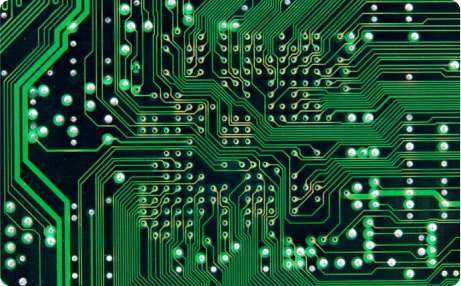
Printed prototype circuit boards are a critical element in the modern electronics industry, enabling high-velocity prototyping that helps minimize development risks, reduce costs, and hasten time-to-market. Regardless of the type of consumer electronics project (IoT module design, automotive system, or control circuit design for an industrial application), efficient PCB prototyping enables better decisions earlier in the project life cycle.
We have assisted hundreds of international customers in elevating their designs and delivering market-ready performance through sophisticated prototyping methods at Shenzhen Leadsintec Technology Co., Ltd. In this guide, we are sharing the most important ones you should be aware of.
A prototype printed circuit board is an initial PCB design created to test its intended design, electrical performance, manufacturability, and assembly quality before full-scale production. This is an important practice as it helps developers detect underlying flaws early - saving time, money, and headaches.
Test real-world performance
· Maximize the location of components.
· Verify signal integrity
· Improve mechanical design
Well-established PCB Prototyping Methods.
Complete design rule checks (DRC). Before you begin manufacturing, your Gerber files are checked for fabrication tolerances. This step helps avoid typical problem areas such as trace-spacing violations, inadequate clearances, and incorrect drill data.
At Leadsintec, our engineers cross-check all files before the prototype, so you don't have to recheck subsequent revisions.
After you have completed your design, the copper layers of the board are created using advanced etching methods that define the circuitry patterns. This enables the production of single-, double, and multi-layer boards with extreme precision.
The result? Good boards that reflect real-world production conditions and performance.
HDI prototyping uses microvias, buried vias, and blind vias to create compact high-performance layouts. It is perfect for current devices that require high routing density, fast signals, and compact designs.
This is used to ensure that engineers test smartphone, wearable, and miniaturized module designs.
Integration of hard and soft PCB forms increases design options when space, mass, and motion are a concern. Rigid-flex prototyping also allows you to experiment with circuits that are subjected to bending conditions - important in aerospace, automobile, and wearable electronics.
Tested techniques such as CNC milling and inkjet PCB printing use rapid prototyping to deliver rapid turnaround without compromising accuracy. Such techniques enable engineers to design physical boards quickly, iterate on designs, and test performance under real conditions.
These rapid cycles help shorten the development cycle and achieve superior outcomes in final production.
Components are not placed and tested until a prototype is complete. At Leadsintec, you will only find one-way prototyping of bare boards and complete prototyping of PCBs, including SMT, BGA, and through-hole soldering, to ensure your design is end-to-end valid.
Extensive testing, such as electrical continuity checks and functional checks, detects problems before they grow.
Identify and avert Costs (Early).
Prototyping exposes unnoticed weaknesses in layout, component placement, or thermal performance that simulation tools may not have detected. Detecting these problems early saves costly revisions once production is underway.
Quick prototyping enables engineers to develop a design and accelerate development in a short period, thereby entering competitive markets early.
Producing an operational prototype creates confidence among stakeholders, investors, and customers. It demonstrates the functionality of your design, not only on paper.
Printed prototype circuit boards are not merely test specimens alone: they are also strategic tools that:
• Reduce overall project risk
• Reduce the expenditure on errors in mass production.
• Quicken product development cycles.
If you are developing next-generation electronics, prototyping is not an option; it is a necessity.
Shenzhen Leadsintec Technology Co., Ltd. specializes in high-precision PCB prototyping and assembly services tailored to your product objectives. Our specialists deliver prompt, high-quality development, from single-piece prototypes to small-volume runs.
Ask us now to talk about your PCB project and get a quote.
We're pleased to be welcoming customers to join us.